Showing posts with label AO1. Show all posts

Friday, 28 June 2013

Economic Reasons - Print


Economic Reasons - Print


In the old edition of newspaper the newspaper was just for news and they didn't have any pictures. It also didn't cost very much. 

The newspaper prices are differ from paper to paper. The most expensive paper being £2 and the least expensive being free.

Newspaper prices vary depending on where they get their funding from. The Metro for example, is a free paper. The reason for this is because companies pay them to advertise their products. The money that they get from the companies goes towards the journalists and photographers salaries because they make the paper very interesting to read

There are some newspapers however that really rely on the money that the newspaper makes. The reason for this is because they will need to pay their employees who work hard every day.  The Sun, for example used to be a Monday - Saturday paper until February 2012 selling on average, 2,751,219 copies a day. The Sun started selling on a Sunday at the end of February 2012  because of the axing of The News of the World because of the hacking scandal.

There are also newspapers that  customers pay a lot more for. The reason for this is because they have more articles an also appeal to a more intellectual market, whereas the Metro you can get in nearly every train, bus station. The reason that they make it better because they want more readers.

The Sun newspaper is one of the most popular tabloid. It costs 35p on weekdays and on the weekends it costs 55p.

The Metro make their newspapers free. The reason for this is because they can increase their audience by having adverts because of their articles and their increase in readership.

Sunday Express magazine 
Guide magazine
The Daily Telegraph put their prices up because they thought that it would gain a lot more profit for their company. The newspaper now costs £1.00.

Now however there are a lot more supplements such as You in The Mail The rise of the supplements happened during the 80s and the 90s. Since they are getting a free magazine it acts as an incentive for the audience to buy it. 

The papers can also have different supplements such as: Gardening, FashionHair and make up, Sport, Property and so on and so on. The public think that they are getting a deal with the magazines but they have to pay a lot more for all of the magazines. 

In the online age there are lot of newspapers which are now online. When the Guardian first started online there didnt have any adverts and tried to survive on the revenue that they got from their paper sales, but there was no hope because they then started having adverts so that their online paper could survive. 

This shows how many individual people have viewed different newspaper online. As you can see The Mail Online is the most viewed blog. 


This other graphic shows in organ how many people have viewed the website on their phones and also the blue line shows how many people they expected to view their website on their mobile phones. 


This graphic shows how many people have viewed it on different mediums such as: online, paper and web only. The Daily Mail/Mail on Sunday is in the lead with over 20,000 views combined. The Dundee Courier and Advertiser has got the least amount of views.


Multinationalism - Print


Multinationalism - Print


What is multinationalism?
Multinationalism is a corporation which is registered in more than one country or they have operations in more than one country.,

Why are newspapers multinational?
There are a lot of different reasons why newspapers are multinational. The reason for this is because you can read a lot of different newspapers on the internet. This means that you can read a newspaper from anywhere in the world. Multinationalism has risen in print since the newspapers have introduced electronic versions of the newspaper where you can pay a weekly subscription so that you have a copy of the newspaper wither on your laptop or on your electronic devices. This means that people are able to research more about the stories that they are reading. Some newspapers though are not free of charge.


The most common website which you can read the news is the BBC Website. It's quick and easy and you can read it in 27 different languages which means that it is one of the most popular websites overseas.

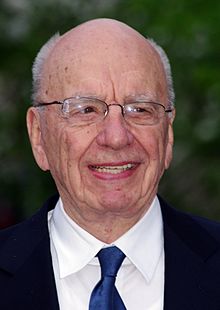
Rupert Murdoch
About Rupert Murdoch
Keith Rupert Murdoch was born on 11th March 1931. He is an Australian American media mogul. He became managing director of Australia’s News Limited which he inherited from his father in 1952. He is also the founder and the Chairman and CEO of global media holding company called News Corporation. It is also the world’s second largest media conglomerate.

In the 1950s and the 60s, Murdoch acquired different newspapers in Australia and New Zealand before he expanded in the United Kingdom in 1969, when he took over the News of the World and then The Sun. He then moved to New York in 1974 so that he can expand into the US market but he retained his interests in Australia and Britain. In 1981, he bought The Times which was his first British broadsheet and he became a naturalised US citizen in 1985.

In 1986 he was keep to adopt newer electronic publishing technologies when he consolidated his UK printing operation in Wapping which caused bitter industrial disputes. His News Corporation bought Twentieth Century Fox (1985), Harper Collins (1989) and also The Wall Street Journal (2007). He also formed BSkyB in 1990 and also during the 90s he expanded into the Asian and South American networks. By 2000 his News Corporation owned over 800 companies in more than 50 countries with a net worth of over $5 billion.

In July 2011 Murdoch faced allegations that his companies which include the News of the World which is owned by News Corporations had been hacking phones of celebrities, royalty and even public citizens. He also faces police and government investigations into bribery and corruption by the British government and also FBI investigations in the US. On July 21st 2012 he resigned as director of News International.

Early Life
Murdoch was born in Melbourne and the only son of Sir Keith Murdoch (1885 - 1952) and Elisabeth Greene (1909 - 2012). He also has English, Irish and Scottish ancestry. His parents were born in Melbourne. His father was a renowned war correspondent and was later a regional newspaper magnate. He also asked for rendezvous with his future wife after seeing her ser debutante photograph in one of his newspapers. They got married in 1928 when she was just ages 19 and he was 23 years her senior. They also has three daughters in addition to Rupert: Janet Calvert-Jones, Anne Kantor and Helen Handbury.

Murdoch attended Geelong Grammar School where he experienced first hand knowledge of editing a publication when he was the co-editor of the school’s official journal The Corian and also the editor of the student journal If Revived. He took part in his school’s cricket team to the National Junior Finals. He also worked part-time for the Melbourne Herald  as he was being groomed by his father to take over the family business. Murdoch studied Philosophy, Politics and Economic at Worcester College, the University of Oxford in England where he became a Labour Leader supporter and also manages Oxford Student Publications Limited which is the publishing house of Cherwell Newspapers. After her husband died from cancer in 1952 Elisabeth Murdoch invested herself in her charity work, and also as life governor of the Royal Women’s Hospital in Melbourne and also established the Murdoch Children’s Research Institute.

Activities in Australia and New Zealand
After his father’s death when he was just 21 Murdoch then returned from Oxford so that he can take charge of the family business News Limited which was established in 1923. He then turned its newspaper Adelaide News, its main asset into a success. He then began to direct his attention to buying and expanding the very troubled Sunday Times in Perth, Western Australia (1956) and then over the next few years bought suburban and provincial newspapers in New South Wales, Queensland, Victoria and the Northern Territory which includes the Sydney afternoon tabloid, The Daily Mirror (1960). The Economist describes Murdoch as “inventing the modern tabloid” since he developed a pattern for his newspapers, increasing sports and coverage on scandals and also adopting eye-catching headlines.

His first move outside Australia is when he was involved in the purchase and the controlling interest in the New Zealand daily The Dominion. While he was touring New Zealand with some friends in 1964 in a rented Morris Minor after sailing across the Tasman, Murdoch read of a takeover bid by the British based Canadian newspaper magnate, Lord Thomson of Fleet. At the spur of the moment he launched a counter bid. The four-way battle for the newspaper Murdoch became successful buying the newspaper. Later that same year, he launched The Australian which was Australia’s first national daily newspaper. It was based first in Canberra and then later in Sydney. In 1972 Murdoch bought the Sydney morning tabloid The Daily Telegraph from the Australian media mogul Sir Frank Packer who then later regretted selling the newspaper to Murdoch. In 1984 Murdoch was then appointed Companion of the Order of Australia (AC) for his services to publishing.

In 1999, Murdoch significantly expanded his music holdings in Australia when he bought a controlling share in a leading Australian independent label, Michael Gudinski’s Mushroom Records. He then merged it with Festival Records and the result was Festival Mushroom Records (FMR). Both the Festival and FMR has been managed by Murdoch’s son James for several years.


Business Activities in the UK
In 1968 Murdoch entered the UK newspaper market when he bought the newspaper News of the World) and then the next year buying the struggling newspaper The Sun from IPC. He then turned The Sun into a tabloid format which reduced costs by using the same printing press for the newspapers. When he bought it he appointed Albert ‘Larry’ Lamb as the editor and Lamb later recalled that he told him"I want a tear away paper with lots of tits in it". In 1997 The Sun attracted 10 million readers daily. In 1981 he bought the struggling Times and Sunday Times from the Canadian newspaper publisher Lord Thomson of Fleet. The ownership of this newspaper came through his relationship with Lord Thomson who grew tired of losing his money on it and as a result stopped publication of it. In the light of his success and the expansion at The Sun the owners then believed that Murdoch could turn things around at the newspaper. Harold Evans, Editor of the Sunday Times from 1967 was made the head of the daily Times, although he only stayed a year after a editorial conflict with Murdoch.

In 1986, Murdoch introduced electronic production process of his newspapers in Australia, UK and the USA. This then led to reductions in the number of employees who are involved in the printing process. In England the move then roused the anger of the print unions, which then resulted in a long and sometimes often violent dispute that played out in Wapping which is one of London’s docklands areas, where Murdoch has then installed the very latest electronic newspaper purpose-built publishing factory in an old warehouse. The dispute first started with the dismissal of 6,000 employees who had gone on a strike which then resulted in street battles and demonstrations. In 1987 the workers who were dismissed accepted a settlement of £60 million.

Murdoch’s British-based satellite network, Sky Television had incurred massive losses in their early years of operation. Just like with other of his business interests, Sky was heavily subsided by the profits which were generated by his other holdings, but was convinced the rival satellite operator British Satellite Broadcasting so that they can accept a merger on his terms on 1990. They were also quick to see the advantages of direct to home (DTH) satellite broadcasting which did not require costly cable networks and the merged company BSkyB dominated the British pay-TV market ever since. By 1996 BSkyB had over 3.6 million subscribers, which was triple the number of cable customers in the UK. The British financier Lord Jacob Rothschild who was a close friend to Murdoch since the 1960s, served as his deputy chairman of Murdoch’s BSkyB corporation from 2003 - 2007. Murdoch also jointly invested with Rothschild in a 5.5% stake in Genie Oil and Gas which got shale gas and oil from Israel.

In response to the print media decline and also the increasing influence of online journalism during the 2000’s Murdoch proclaimed his support of the micropayments model for obtaining revenue from online news. This although has faced some criticism by some people.

The News Corporation has subsidiaries in the Bahamas, Cayman Islands, Channel Islands and the Virgin Islands. From 1986, News Corporation’s annual tax bill averaged around 7&% of its profits.

BBC Online
BBC Online is the name of and the home of the BBC’s UK online service. It is a large network of websites which includes very high profile sites such as BBC News and Sport. There is also an on-demand video and radio services which were co-branded BBC iPlayer, the pre-school site CBeebies and also learning services such as Bitesize. The BBC has also had an online presence in supporting their TV and radio programmes and web-only initiatives since 1994 but they didn’t launch officially until December 1997 when it gained government approval so that it can be funded by TV licence fee revenue as a service in their own right. Throughout their short history, the online plans of the BBC have been subject to harassment from their rivals which have resulted in many different public consultations and also government reviews so that they can investigate their claims that their large presence and also with public funding distorts the UK market.

The website has also gone through a lot of different branding changes since it was launched. It was originally called BBC Online and then it was rebranded as BBCi before then being renamed bbc.co.uk. It was then branded BBC Online again in 2008.

Cultural Changes

Audience Needs and Lifestyle - Print

Advances In Technology - Print

Changes in Content - Audio-Visual

Changes in Content - Audio-Visual


Coronation Street logo
About Coronation Street
Coronation Street is a British television soap opera which was first broadcasted on Granada Television in 1960. It was then soon syndicated on other ITV franchises. The show is about the lives of the residents of Coronation Street in the fictional town called Weatherfield which is a fictional town based on Salford. The show centres around its terraced houses, a cafe, corner shop, newsagents, textile factory and also the Rovers Return public house.
The show was devised in 1960 by a local scriptwriter called Tony Warren and the recently formed Granada Television in Manchester. His initial proposal was rejected by the founder of the station Sidney Bernstein but he was then persuaded by the producer Harry Elton to produce the programme for thirteen episodes. The show was first broadcasted on 9th December 1960 and within half a year became the most watched programme on British Television. It has also been on of the most financially lucrative programmes on British commercial television and unpinned the success of Granada Television franchise and the broadcaster ITV.
Coronation Street is made by Granada Television at Granada Studios in Manchester. It is also shown on all ITV regions and also internationally. On September 17th 2010 Coronation Street became the world’s longest-running TV soap opera in production. It is noted for its depiction of a down-to-earth working class community which is combined with light-hearted humour and strong characters.
Jailing of Deirdre Rachid
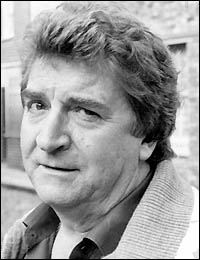
Peter Adamson
Storylines in Coronation Street
Since the soap started at the beginning end of 1960 there have been a lot of different storylines which have caused some controversy with the British public and also a public outcry from the viewers.
The most popular storylines saw an increase in the viewer-ship of the soap. These include:
  • Jailing of Deirdre Rachid (1988)
  • The sacking of Peter Adamson (Len Fairclough) {1983}
There are also different storylines which have seen to be controversial by the viewers. For instance the sacking of an actor by the producer.
Storylines in 1960s
The first episode which was broadcasted was not a success. The columnist for the Daily Mirror Ken Irwin thought that the series would last just three weeks. Initially Granada Studios only thought out 13 episodes because some of the employers doubted that it wouldn't last.
Although they received a lot of criticism a lot of viewers were taken by the show and they were won over by the ordinary characters that they has to offer.
Ken Barlow 
The early episodes were about a student called Kenneth Barlow. He won a place at university. Kenneth found that the background that he had which was working class was something of an embarrassment. He was the only character who had seen the outside world rather than what was going on in Coronation Street. Roach was the only original character until Dennis Tanner (Philip Lowrie) came back in May 2011. He is also the longest serving actor in Coronation Street and also in all of the history of soaps worldwide.


Ena Sharples (Victoria Carson) was at the centre of a lot of the early storylines. She was the caretaker of Glad Tidings Mission Hall. Her two friends Minnie Caldwell (Margot Bryant) and Martha Longhurst (Lynne Carol) were always with her. The three of them would sit in the Rovers Return and judged family, neighbours and sometimes even each other. Ena also sometimes classed with Elsie Tanner. She believed that Elsie had little morals. Elsie didn't like that Ena would interfere in her life and gossip about her.
Jed Stone 


Jed Stone first appeared in April 1961 and then returned a year later. He then left again for the second time to only appear 3 years later. He left for the third time only to appear 42 years later in 2008.


There were a lot of storylines which happened during the 60s. The main ones were:
  • Elsie Tanner getting a mysterious poison-pen letter.
  • Ken Barlow and Valerie Tatlock’s marriage
  • Martha Longhurst death
  • The Barlow twins being born
  • Elsie and Steve Tanner’s wedding
  • Steve Tanners death
  • Coach crash


Despite of the rising popularity of the viewers, the show was criticised by the media for its non-current portrayal of the working class in an urban area. The representation of the community that was a fantacy.


Despite the criticism that they have faced Granada then decided that they were going to update the programme. They were going to have more issue-driven stories such as:
  • Lucille Hewitt facing a drug addiction
  • A storyline about homosexuality with Jerry Booth
  • Emily Nugent having a child without being married
  • A black family.


These were dropped however because they thought that they were going to upset the viewers.


Storylines in the 1980s
During the 80s Coronation Street went under a lot of changes since their launch. By the middle of the decade the only original cast member was Ken Barlow after a lot of the cast members left. The media thought that that Coronation Street was going to end because there wasn't any stars left.


The writers then thought about having characters who were similar to the ones which had left. These include:
  • Phyllis Pearce (Jill Summers) as the ‘new’ Ena Sharples
  • The Duckworths moving into No. 9 replacing the Ogdens
  • Percy Sugden (Bill Waddington) taking over the grumpy old man from Albert Tatlock.


Bet Lynch
After Annie Walker’s exit the main question was who would take over the pub. After two years this role was taken by Bet Lynch who was similar to Elsie Tanner. She was now the new landlady.


Coronation Street also had their first major black character called Shirley Armitage who was a machinist at Baldwin’s Casuals.


More than 24 million people watched Ken Barlow and Deirdre Langton’s wedding which was more than the people who viewed the wedding of Prince Charles and Lady Diana which happened two days after.


During the 1980s there were also relationships established from the characters. These include:
  • Alf Roberts (Bryan Mosley) marriage to Audrey Potter (Sue Nicholls)
  • Kevin Webster (Michael Le Vell) marriage to Sally Seddon (Sally Dynevor)
  • Alec Gilroy marriage to Bet Lynch
  • Don Brendan marriage to Ivy Tilsley
  • Derek Wilton marriage to Mavis Riley


Brookside logo
Coronation Street also received competition from Channel 4 about their new soap called Brookside. It was different from Coronation Street who had a very desirous view of the working class life. Brookside on the other hand brought together working and middle class in a more modern environment.


The dialogue sometimes included swearing and the they were storylines that they had were more hard-hitting. The stories in Coronation Street included things such as family affairs, etc. Brookside on the other hand focused on stories which such as: industrial action, unemployment and the black market.


The BBC also started a new soap opera called EastEnders which started in 1985. Just like Brookside, EastEnders had a lot more promise than Coronation Street. EastEnders tended to steer clear of bad language and political stories.


Although the ratings for Coronation Street remained consistent throughout the 80s, EastEnders got higher viewers. Coronation Street was seen to be old fashioned when they introduced the Clayton which was a huge failure because they lost viewers.


In the later part of the decade there were different aspects of the show which were modernised. There was a new exterior set which was built in 1982 and 7 years later it was then redeveloped so that it now included new houses and shops.


The production techniques they had were also changed because they had a new studio built so that they can include more location filming in their shots. They had also moved from shooting on film to shooting on video tape. They were also facing different pressures so the audience saw an introduction of a third weekly episode which was shown on Friday.


During the 1980s the show saw some of the most prominent storylines in the history of the programme. These include:


  • Deirdre Barlow's affair with Mike Baldwin. (This was the shows first storyline which attracted a lot of attention from the media.)
  • The Rovers Return fire
  • Alan Bradley abusing Rita Fairclough and then his death soon afterwards.
  • Nicky Tilsley’s birth
  • Elsie Tanner leaving
  • Stan OGden’s funeral
  • Sarah-Louise Tilsley’s birth
  • Brian Tilsley's murder


They were also new characters which were introduced in the soap. These include:


  • Terry Duckworth (Nigel Pivaro)
  • Curly Watts (Kevin Kennedy)
  • Steve McDonald (Simon Gregson)


Storylines in the 2000s
The show celebrated their 40th year in 2000 by having a live broadcasted episode for an hour. On the ITV news bulletin The Prince of Wales appeared as himself.  One of the main storyline in this decade was when 13 yr old Sarah-Louise Platt became pregnant and gave birth to a baby girl call Bethany.


Mike Baldwin and Linda Sykes
Another main storyline was when Mike Baldwin married Linda Sykes. Shortly afterwards however when his son was drunk he confessed she was cheating on him. This storylines attracted over 16.8 million viewers and also it won Best Storyline at the British Soap Awards.


This decade also saw a lot of issue driven storylines. These include:


  • Toyah Battersby’s rape
  • Roy and Hayley Cropper adopting a foster child
  • Sarah Platt’s internet chat room abduction
  • Alma Halliwell’s death due to cervical cancer


These storylines were unpopular with the viewers and the ratings dropped. When this happened their executive producer was soon moved to another department and someone new took over. When this happened Corrie still struggled in the ratings and Eastenders started some of their strongest stories.


Kieran Roberts was appointed as the new producer in 2002 and he aimed to re-introduce “gentle storylines and humour”, after he decided that Coronation Street should not try and compete with other soaps.


Storylines which happened in this decade include:


  • Gail Platt married Richard Hillman (Brian Capron)


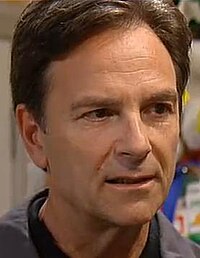
Richard Hillman
Hillman is a financial adviser who would go on to have a lot of different storylines in the soap. These include:
  • Leave Duggie Ferguson to die
  • Kill his ex-wife Patricia
  • Attempt to kill his mother in law Audrey Roberts
  • Kill Maxine Peacock
  • Attempt to kill Emily Bishop


After he confessed to the murder of Maxine and his ex-wife, he then attempted to kill Gail and her children Sarah and David as well as Sarah’s daughter Bethany. He tried to do this by driving them into a canal.


This storyline got a lot of attention from the press and the viewing figures started to pick up again. Hillman was then dubbed a serial killer by the press.


  • Todd Grimshaw became the soaps first gay character and also in 2003 there was another gay character called Sean Tully (Anthony Cotton).
  • Karen McDonald (Suranne Jones) was developed and she had a fiery marriage with Steve and a fight with Tracy Barlow.
  • The Baldwin family returned when Mike’s nephew Danny and his wife moved from Essex with their sons Jamie and Warren.
  • Peter Barlow became addicted to alcohol.
  • Maya Sharma’s revenge on her former lover Devendra Alahan
  • Charlie Stubbs abusing Shelley Unwin
  • Mike Baldwin, Vera Duckworth and Fred Elliott dying
  • Tracy Baldwin killing Charlie Stubbs in self defence
  • Leanne Battersby becoming a prostitute
  • Corrie’s first bi-sexual love triangle


The main family who were at the centre of all the storylines. These include:
  • An accidental death of a Polish worker
  • Michelle discovering that her two brothers Paul and Liam were the person involved in her husband’s death
  • Paul using an escort service
  • Paul kidnapping Leanne and then his death


After 34 years of the show Vera Duckworth (Elizabeth Dawn) left because of ill health in 2007. There was a conversation with Dawn and the producers Kieran Roberts and Steve Frost they made a decision to kill her off which they did in the beginning of January 2008.


Tina O'Brien told to the British press that she was going to leave Coronation Street. O’Brien was involved in some of the most controversial stories in the decade and left in December 2007.


Michelle learnt in 2008 that Ryan wasn’t her real son and that he was switched at birth with Alex Neeson. Carla Connor turned to Liam for comfort and then started to develop feelings for him. Despite knowing about her feeling Liam decided to marry someone else. When Liam discovered that his son was stillborn in April. Liam and Maria then became estranged when their baby died. Liam then had a one night stand with Carla which helped in his departure story.


David Platt (Jack P. Shepard) pushed his mother Gail down the stairs. David then vandalised the street and was then sent to a young offenders’ facility because he was annoyed that his mother refused to press charges.


During 2008 Gail finally met her father Ted Page. A year later her boyfriend Joe McIntyre had an addiction to painkillers. This first started when he broke into the medical centre.


In August of the same year Jed Stone returned after 42 years.


Liam Connor and Carla Connor (his ex-sister-in-law) started an affair after giving into their feelings. Her fiance Tony found out about the affair and then had Liam killed in a hit and run. After struggling to come to terms with Liam’s death she decided that she was still in love with Tony and then eventually married him.


It was revealed in 2009 that Eileen Grimshaw’s father Colin slept with her classmate Paula Carp while they were still in school and that Paula’s daughter Julie was also Colin’s daughter.


Also in the same year Norris Cole saw someone from the past when his estranged brother Ramsay Clegg (Andrew Sachs) who wanted to talk to him.


Peter Barlow was still battling against alcoholism.


After his dog Eccles fell into a canal Ken Barlow started an affair with the actress Martha Fraser.


Also in the same year Maria gave birth to Liam’s son and her relationship with Liam’s killer Tony.


Steve McDonald and Becky Granger got married.


Kevin Webster and Molly Dobbs started an affair and on Christmas day Sally told her husband Kevin that she had breast cancer at the same time he was going to leave her for Molly.